Every morning, millions of Indians step out to work — not thinking what would happen if they never came back home. Their families depend on their income, yet most have no protection plan. That’s where term insurance quietly becomes the real hero of financial planning.
If there’s one financial product every earning Indian should own, it’s a term insurance plan. Not because it’s trendy or tax-saving, but because it’s the one thing that stands between your family and financial chaos if something happens to you.
Still wondering why term insurance is important when you’re already saving and investing? Let’s talk real — investments build wealth, but insurance protects it. And if you don’t have that protection in place, your financial plan is incomplete — no matter how much you invest.
This guide breaks down everything you need to know — from the importance of term insurance and coverage amount to the best time to buy and how to choose the right policy.
What Is Term Insurance and How Does It Work?
A term insurance policy is the simplest and most affordable form of life cover. You pay a premium every year for a specific term — say 20, 30, or 40 years. If you pass away during that period, your nominee gets the sum assured (the payout).
If you survive the term, there’s no payout (unless you pick a return-of-premium plan). The idea is simple: it’s pure protection, not investment.
That simplicity is exactly what makes it powerful — and that’s why term insurance is important as a foundation for financial security.
Key Features of a Term Plan
- High coverage at a low premium
- Fixed policy term (10 to 40 years)
- Tax benefits on premiums and payout
- Add-on riders like critical illness or accidental death cover
- Peace of mind knowing your family is financially protected
Why Term Insurance Is Important for Every Indian
Let’s be honest — most people in India still see insurance as a tax-saving trick. But term insurance is different. It’s not about saving tax or getting returns; it’s about ensuring your family won’t face financial ruin if your income stops.
Here’s the reality of why term insurance is important in India — explained with practical logic, not jargon.
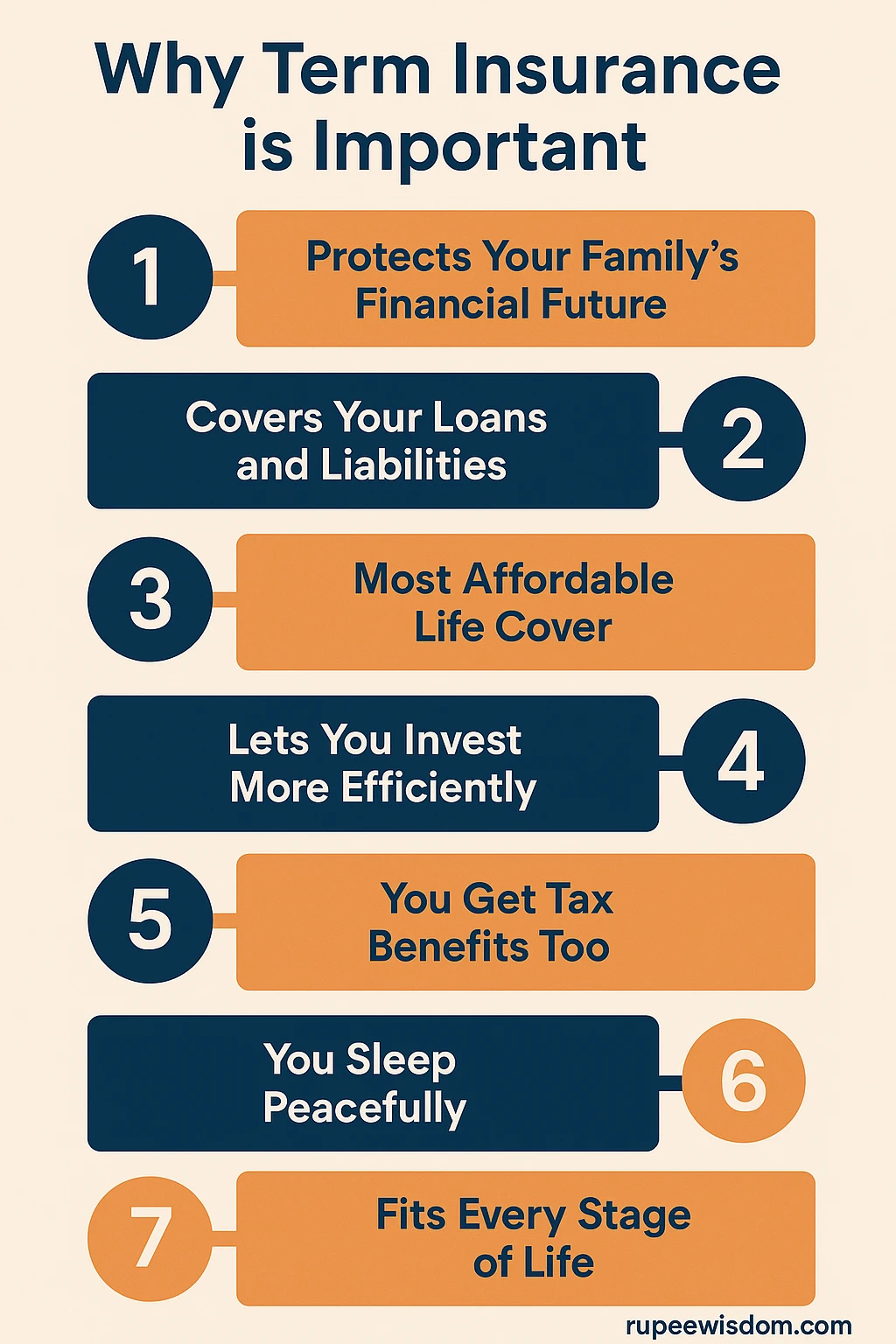
1. It Protects Your Family’s Financial Future
The biggest reason why term insurance is important is because it replaces your income when you’re not around.
Imagine you earn ₹10 lakh a year and your family depends on it for rent, school fees, and living expenses. If you were gone tomorrow, could they sustain that life? Probably not.
Term insurance steps in to fill that gap — your family gets a lump-sum payout that can cover living costs, loans, and major future expenses.
That’s not just protection. That’s continuity of dignity for the people you love most.
2. It Covers Your Loans and Big Liabilities
Today’s India runs on EMIs — home loans, car loans, personal loans, you name it. And if something happens to you, those EMIs don’t stop.
Without insurance, your family inherits your debts. With the right term plan, your sum assured can clear off every major liability immediately. Your family keeps the home, not the burden.
This is one of the most practical benefits of term insurance that people often overlook.
3. It’s the Most Affordable Life Cover
You can’t beat term insurance on value.
At age 25 or 30, a ₹1 crore cover can cost as little as ₹600–₹900 a month. That’s less than a coffee a day for peace of mind worth crores.
The earlier you buy, the lower your premium. That’s why you should buy term insurance as soon as you start earning. Waiting only makes it costlier — or worse, riskier if health issues arise later.
4. It Lets You Invest More Efficiently
A lot of people in India still buy “mixed” policies — traditional or money-back plans that combine savings and insurance. The problem? They give low returns and low cover.
A term plan, on the other hand, separates protection from investment. You get high cover at low cost — and can freely invest the rest in better options like SIPs, NPS, or real estate.
That’s what financially smart people do — insure first, invest next.
5. You Get Tax Benefits Too
Another reason why term insurance is important is the tax advantage.
Under Section 80C, premiums up to ₹1.5 lakh per year are tax-deductible. And under Section 10(10D), the payout your family receives is tax-free. For official information and regulatory updates about term insurance, you can visit the Insurance Regulatory and Development Authority of India (IRDAI)
So, even though protection is the main purpose, you still save tax as a bonus.
6. You Sleep Peacefully
Life is uncertain — job loss, illness, accident, or sudden death can throw everything off balance. Having a strong term cover means you can stop worrying about “what if something happens”.
The importance of term insurance isn’t just financial — it’s emotional. It gives peace of mind knowing that your loved ones won’t have to struggle.
7. It Fits Every Stage of Life
Whether you’re single, married, a new parent, or nearing retirement — term insurance fits every phase:
- Single: Lock low premiums now for long-term coverage.
- Married: Protect your spouse’s lifestyle and financial security.
- Parents: Ensure your children’s education and marriage goals.
- Homeowners: Cover your housing loan completely.
- Retiring soon: Keep protection until your dependents are self-reliant.
This flexibility is another big reason why term insurance is important for Indian families.
To understand how term insurance benefits change as your responsibilities grow, read our detailed guide on Life Stage Benefits in Term Insurance.
How Much Term Insurance Cover Should You Take?
You don’t want to buy random numbers. A ₹50 lakh policy sounds huge — but won’t be enough if you earn ₹10 lakh/year.
A quick rule:
Term Cover = (10–15 × Annual Income) + Liabilities + Future Goals
So if you earn ₹12 lakh, have a ₹40 lakh home loan, and future needs worth ₹15 lakh, your cover should be at least ₹1.7–₹2 crore.
That’s how you truly replace income, not just pay off loans.
Also, remember inflation. What seems large today may look small 20 years from now. Always plan long-term.
Choosing the Right Term Duration
Your policy term should ideally cover your entire working life.
- If you’re in your 20s or early 30s → choose 30–35 years (till age 60–65)
- If you’re in your 40s → go for 15–20 years
- If you’re older → cover until your financial dependents are secure
The goal is simple: keep your family protected while they depend on your income.
Must-Have Riders for Extra Safety
Riders are optional add-ons that give extra protection for a small cost.
Here are a few worth considering:
- Accidental Death Rider: Extra payout in case of accidental death.
- Critical Illness Rider: Pays a lump sum on diagnosis of major illnesses.
- Waiver of Premium: Future premiums waived if you become disabled or critically ill.
- Income Benefit Rider: Gives monthly income to family instead of one-time payment.
- Return of Premium Option: Refunds your paid premiums if you survive the policy term.
These add layers of protection and flexibility — especially useful in the Indian context where medical costs are rising fast.
What Happens If You Delay Buying?
Delaying your term plan is like playing with fire. Here’s why:
- Premiums rise sharply with age.
- Health issues may lead to higher cost or even rejection.
- You leave your family unprotected in the meantime.
Think of it this way — you don’t wait to buy health insurance until you fall sick. Similarly, don’t wait to buy term insurance until life reminds you why it’s important.
Common Myths About Term Insurance
Myth 1: “It’s a waste if I survive.”
No, it’s not. You don’t expect your car insurance to pay you if you don’t crash. The goal is protection, not profit.
Myth 2: “My company insurance is enough.”
Employer cover ends when you switch jobs or retire. And it’s often too low. Always have your own independent term policy.
Myth 3: “I’ll buy it later.”
Later means costlier — and riskier. The younger and healthier you are, the cheaper it is.
Myth 4: “Only earners need it.”
Even homemakers or non-earning spouses should have cover — their absence means extra costs for childcare and home management.
Step-by-Step: How to Buy the Right Term Plan
- Calculate your requirement using the income × 15 formula.
- Pick the right term (till 60 or 65 years).
- Compare plans online for best cover and claim record.
- Add essential riders only, avoid unnecessary ones.
- Undergo medical tests — be transparent about health and habits.
- Update nominee details and share info with your family.
- Pay premiums on time — a lapsed policy is worthless.
- Review every 3–5 years as income, debts, and family size change.
Following this checklist ensures your term plan actually delivers when needed.
Real-Life Example: How Term Insurance Saves Families
Case 1: The Early Planner
Rohan, 30, buys a ₹2 crore term plan for 30 years. Sadly, at 40, he passes away in an accident. His wife and kids get the full ₹2 crore payout.
It clears their home loan, secures education, and ensures they live comfortably.
Case 2: The Procrastinator
Same income, same goals — but he keeps delaying. At 38, he develops diabetes. Premiums double; one insurer rejects his proposal. He finally buys late at a higher cost and lesser cover.
Life insurance works best when you buy before you need it — that’s the core reason why term insurance is important.
India-Specific Insights You Should Know
- Inflation erodes value: Review and top-up your cover every few years.
- Homemakers deserve coverage too: Their contribution saves huge costs.
- Online buying is cheaper: No agent commissions.
- Claims are smoother: Digital claim filing is fast and hassle-free.
- Honesty matters: Non-disclosure is the top cause for claim rejection.
How to Increase Your Term Cover Over Time
Life changes — your insurance should too.
Increase cover when:
- You get married
- Have children
- Buy a home
- Take new loans
- Your income grows
Many policies offer “increasing cover” options where sum assured automatically rises each year. It’s smart protection against inflation.
What Happens After the Policy Ends?
If you survive your policy term, the cover stops.
And that’s perfectly fine — by then, your children are grown, debts cleared, and savings built.
If you want, you can choose a return-of-premium plan that refunds what you paid — but pure term is usually better value.
Why Term Insurance Is Important: Final Thoughts
If you take one thing from this article, it’s this:
Term insurance isn’t a cost. It’s your family’s financial backup plan.
It doesn’t give you returns, it gives you reassurance — that your family won’t suffer financially if life takes an unexpected turn.
So don’t think twice.
Buy early, buy smart, review regularly — and rest easy knowing you’ve built a safety net strong enough to hold your world together.
That’s why term insurance is important — not just as a product, but as a promise.